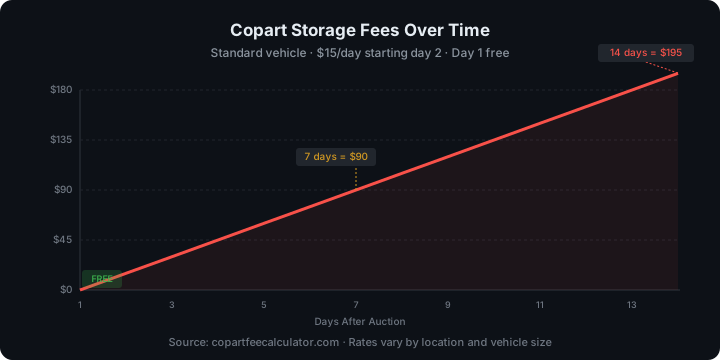
Copart gives you one free day after the auction closes. From day two onward, standard vehicles accrue roughly $15 per day in storage fees. A 7-day pickup delay adds $90 to your invoice; 14 days adds $195. Arrange transport before you bid, not after you win.
Storage fees are the most avoidable cost at Copart, and the one that surprises buyers most. A car that looked like a clean deal at $2,500 can quietly get $150 more expensive while it sits on the lot waiting for pickup.
How Copart Storage Fees Are Calculated
Copart's storage clock starts the day after the auction closes. Day one is free. Day two through pickup, you're paying.
The rate for a standard passenger vehicle is approximately $15 per day. That charge applies seven days a week, weekends included. Copart doesn't pause billing for holidays, and they don't send reminders when fees are accumulating.
The fee is added to your invoice and must be paid before Copart releases the vehicle. You can't pick up without settling the full balance, including any storage charges.
One thing buyers miss: if payment processing takes a day or two, that counts toward your storage window. The clock doesn't start when you pay, it starts when the auction closes.
Standard vs. Large Vehicle Storage Rates
Not all vehicles accrue storage at the same rate. Copart uses a few different categories:
Standard vehicles: passenger cars, sedans, hatchbacks, most SUVs: ~$15/day
Large vehicles: pickup trucks, full-size vans, larger SUVs: ~$25/day
Oversized/specialty: RVs, box trucks, heavy equipment, boats: $35-$50+/day
If you're bidding on a full-size truck or a commercial vehicle, your per-day exposure is significantly higher. A 10-day delay on an oversized vehicle can mean $350-$500 in storage alone.
Copart's exact storage rates can vary slightly by yard location and vehicle category. Always check the specific lot's fee schedule on your member portal, particularly for non-standard vehicles. For a full picture of what you'll owe before and after the auction, the Copart fee calculator lets you factor in estimated storage days alongside the buyer fee.
How Fast Storage Fees Add Up (Real Examples)
Storage costs feel manageable in isolation. They become a problem when transport takes longer than expected.
3-day pickup (2 billable days):
- Standard vehicle: $30
- Large vehicle: $50
7-day pickup (6 billable days):
- Standard vehicle: $90
- Large vehicle: $150
14-day pickup (13 billable days):
- Standard vehicle: $195
- Large vehicle: $325
Now layer those numbers onto a real purchase. Say you win a $2,500 sedan, add the $299 Basic buyer fee, the $79 virtual bid fee, and the $79 gate release fee, you're already at $2,957. Add 14 days of storage ($195) and you're at $3,152. That's a 26% premium on top of the auction price before the vehicle moves an inch.
The math changes when you're buying at higher price points, but the proportional impact of storage stays significant. On a $1,500 car, 14 days of storage represents 13% of the vehicle cost. That's not a rounding error.
How to Avoid Storage Fees: 5 Practical Steps
Storage fees are easy to avoid if you plan ahead. Most buyers who rack them up didn't have transport lined up before they bid.
1. Book transport before the auction, not after.
Get quotes from two or three auto transport brokers before the sale. Services like uShip, Montway Auto Transport, and Stateway Auto Transport all move Copart vehicles regularly. Have a confirmed booking or at minimum a confirmed quote and availability window before you bid.
2. Set your pickup target at 3 days or fewer.
The first billable day is day two. If you can get the vehicle off the lot within 3 calendar days of the auction close, your storage cost stays under $30 for a standard vehicle. That's the target to aim for.
3. Pick up yourself when logistically possible.
If the Copart yard is within driving distance and you have a trailer or tow setup, self-pickup eliminates transport delays entirely. You control the timeline and there's no waiting on a carrier's schedule.
4. Avoid bidding on vehicles you can't move quickly.
It sounds obvious, but buyers sometimes win vehicles they don't have immediate transport lined up for. If your transport options are uncertain, weather, carrier availability, logistics, don't place the bid yet. Wait until you can execute the pickup within your free window.
5. Know the yard's hours before you schedule.
Copart yards have set release hours, typically Monday-Friday with limited Saturday access. Some yards don't release vehicles on weekends at all. If you win on a Friday and the yard is closed Saturday and Sunday, your first billable day is Saturday. Plan for that in your transport scheduling.
For more on what gets billed at pickup, see the Copart gate release fee guide, that $79 charge applies to every vehicle and is separate from storage. If you want to understand how this calculator's fee data is sourced, the About page explains the methodology behind every estimate.
What Happens If You Can't Pick Up on Time?
Sometimes transport falls through. Carriers cancel, weather delays happen, and unexpected issues come up. Here's what to know if you're looking at an extended storage situation.
Contact the yard directly. Copart yard managers have some discretion on fees in cases of legitimate delays. It's not guaranteed, but calling proactively and explaining the situation can occasionally result in a partial reduction. Don't expect a full waiver, but it's worth a call before your bill gets large.
Factor in the accumulating cost when deciding whether to continue. If transport is delayed by two weeks and your storage fees are approaching $200-$300 on a low-value vehicle, you need to honestly reassess whether the deal still makes sense. Some buyers walk away from low-value wins rather than pay a transportation cost plus storage that exceeds the vehicle's worth.
You can't abandon the vehicle to avoid fees. Copart will pursue collection on unpaid invoices, and your account can be suspended for non-payment. There's no clean way to walk away from a winning bid once the auction closes.
Late payment can trigger additional charges. Copart requires payment within a specific window after the auction (typically 24-48 hours). Late payment can add administrative fees on top of the storage accrual.
The cleanest approach is always to have everything arranged in advance. Read through Copart buyer fees explained to make sure you're accounting for every line item before you bid, storage is just one piece of the total cost picture.
Getting Ahead of Every Fee Before You Bid
Storage fees aren't complicated. They're a flat daily rate that starts ticking on day two. The buyers who avoid them are simply the ones who treat transport as part of the bid preparation, not an afterthought.
Before any auction, run your total expected cost, including estimated storage days, through the Copart auction cost calculator. It takes 60 seconds and gives you a realistic number to budget against. Know your transport timeline, confirm your carrier, and you'll rarely see a storage charge on your invoice.
The goal is to have the vehicle off the lot before day two. Everything else is just execution.